Showing posts with label unbelievable. Show all posts

Thursday, December 13, 2007

THE WORLD'S FASTEST HUMAN CALCULATOR

The human calculator: 393 trillion answers - and he picks the right one in 70 seconds


When the answer is 2,407,899,893,032,210 you know the question is tough.

Not so tough, however, that Alexis Lemaire could not work it out in his head.

His challenge yesterday was to come up with the 13th root of a computer-generated 200-digit number.

And, with 393 trillion possible answers to choose from, the PhD student made it almost look easy.

A mere 70.2 seconds later, he cracked it and officially became the world's fastest human calculator.

A slight frown and a stare of deep concentration had been the only sign the 27-year-old "mathlete" was doing anything more than running through the eight times table.

Appropriately, the Frenchman broke his previous world record of 72.4 seconds at the Science Museum in London, where he had a backdrop of Charles Babbage's 1840s Difference Engine No2, the first successful mechanical calculator.

For those in the know, 13th roots are a yardstick in mental arithmetic for mathletes determined to show ever greater feats of brainpower.

A 13th root is - if your maths is no longer at Mr Lemaire's level - a number that multiplied by itself 13 times matches the initial figure.

Lemaire used a computer to generate a massive 200-digit number before working out its 13th root

Mr Lemaire, from Reims, began demonstrating his mental prowess by finding the 13th root of a random 100 digit number.

But this soon became too easy. The first time he tried a 200-digit challenge, it took him 40 minutes.

Since then, he has put himself through a mental training regime that has seen him repeatedly cut his time.

Cracking the answer is, apparently not all about maths, it also owes a lot to memory. Mr Lemaire, who is single, has memorised thousands of combinations of 13th root numbers.

"It's a bit like multiplication tables but with huge digits," he said. "It's a combination of techniques, partly memory and partly maths."

Asked to explain further, he would only say: "I won't give you my secret."

He did, however, agree to try the Daily Mail's 30-Second Challenge, and finished the advanced task in eight seconds.

It was a more than respectable performance - but, for a champion "13th rooter", it didn't seem that impressive.

Perhaps he was still tired after his world record.

Saturday, November 24, 2007

Record-busting scorpion was bigger than man

Paris: This was a bug you couldn’t swat and definitely couldn’t step on. British and German researchers reported Wednesday that they had discovered the giant fossilised claw of an ancient sea scorpion that, hundreds of millions of years ago, would have been over 8 feet long - much taller than the average man, and almost as long as a car.

The find, in a quarry near the German town of Pruem, is the biggest specimen of arthropod ever found, they said in a study published by Biology Letters, a journal of Britain’s Royal Society.

“This is an amazing discovery,” said Simon Braddy, from the University of Bristol in England.

“We have known for some time that the fossil record yields monster millipedes, super-sized scorpions, colossal cockroaches and jumbo dragonflies, but we never realised until now just how big some of these ancient creepy-crawlies were”


The 18.4-inch claw was wielded by a species of sea scorpion called the Jaekelopterus rhenaniae, which lived between 460 and 255 million years ago.

Using the claw as a benchmark, the scientists believe its owner was between 7.57 and 8.41 feet long.

Chelicerae - wand-like appendages used to grasp food and bring it to the beast’s mandibles - would have added another 1.6 feet.

“This exceeds the previously-recorded maximum body length of any arthropod by almost half a metre, the chelicerae not included,” their study says.

Despite their name, sea scorpions, known as eurypterids, were not true scorpions. Equipped with long, flat, jointed carapaces, they stalked warm shallow sea waters from around 500 million to 250 million years ago, eventually moving into fresh water.

Biologists delving into Earth’s distant past are divided as to how some arthropods were able to develop into such monstrous size.

Some suggest that they benefit from an oxygen-rich atmosphere, while others argue that they had to get bigger in order to keep up with the super-sizing of their likely prey, the early armoured fish.

“There is no simple single explanation,” said Braddy. “It is likely that some ancient arthropods were big because there was little competition from the vertebrates, as we see today. If the amount of oxygen in the atmosphere increased suddenly, it doesn’t mean all the bugs would get bigger.”

Friday, September 28, 2007

Weird And Wonderful Ways To Set Records

Remarkable Records

The 2008 edition of the Guinness World Records book features brand new weird and wonderful achievements from around the globe.

Let's start with a category that must be one of the most hotly contested.

It's no wonder he looks chuffed after setting the record for unhooking the most bras.

Who said sofas were for couch potatoes?
And who would have thought there was a record for the fastest furniture?

Now that is some serious squirting.
Don't try this at home or you'll be crying over spilt milk.

"When I grow up I want to be just like you."
The tallest and smallest horses suss each other out.

Here's a record that will make your head spin.
89 times in one minute to be precise.

How many hula hoops could you handle?

The appropriately named Bigfoot 5 makes it into the book as the largest monster truck.

What looks like steps to the sun is actually a tower of milk crates balanced on the chin.


Look Mum, no feet!
Helium balloons are probably not the most reliable form of air travel but they are great for setting a wacky record.

It's not worth walking over hotplates for anything, or is it?

Well maybe if you get your name in the Guinness World Records book...................................

Thursday, September 27, 2007

The world's tiniest baby - born at 24 weeks and weighing just 10oz

Tiny Kimberley Mueller weighed just over 10 ounces when she was born - making her the world's smallest surviving baby.

Her chances of living were rated at worse than 1,000-1 when she was born 15 weeks prematurely.

These incredible pictures published for the first time today show that Kimberley was about the size of a mobile phone at birth.

Now six months old, the miracle baby has been allowed home for the first time.

The size of a mobile phone: Kimberley Mueller weighed just over 10 ounces when she was born in Hanover, Germany - making her the world's smallest surviving baby

But Kimberley, who was just 10.2cm long, spent months on a life support system as doctors in Germany fought to save her.

The tiny mite was kept in an incubator for warmth and drip-fed, while a respirator help her breathe.

British birth experts said it was "incredible" that she had survived.

Now six months, Kimberley has been allowed home for the first time (Above with mother Petra and father Andreas)

Dr Arvind Shah, consultant paediatrician at Great Ormond Street's Middlesex unit, said: "This is amazing - she must be a little fighter.

"Now we have more sophisticated equipment premature babies do have a better chance of living. But there are obviously huge health risks."

Kimberley's chances of living were rated at worse than 1,000-1 when she was born 15 weeks prematurely

Kimberley's mother Petra Mueller, from Hanover, said: "I was allowed to stroke her with my finger and I always spoke to her.

"It was the nicest thing when she would grip my finger in her tiny hands."

Friday, August 31, 2007

What spider could construct such a massively creepy web?

There are times when you can literally hear the screech of millions of mosquitoes caught in this eerie spider web.

Officials at Lake Tawakoni State Park say the sprawling spider web is a big attraction for some visitors, while others will not go anywhere near it.

Now entomologists are debating the origin and rarity of the web that blankets several trees, shrubs and the ground along a 200-yard (182-metre) stretch of trail in a North Texas park.


The webs bring to mind the terrifyingly large spiders featured in the Harry Potter movies

"At first, it was so white it looked like fairyland," said Donna Garde, superintendent of the park about 45 miles (72 kilometres) east of Dallas. "Now it's filled with so many mosquitoes that it's turned a little brown. There are times you can literally hear the screech of millions of mosquitoes caught in those webs."

Spider experts say the web may have been constructed by social cobweb spiders, which work together, or could be the result of a mass dispersal in which the arachnids spin webs to spread out from one another.

"I've been hearing from entomologists from Ohio, Kansas, British Columbia - all over the place," said Mike Quinn, an invertebrate biologist with the Texas Parks and Wildlife Department who first posted photos online.

Herbert A. "Joe" Pase, a Texas Forest Service entomologist, said the massive web is very unusual. "From what I'm hearing it could be a once-in-a-lifetime event," he said.

But John Jackman, a professor and extension entomologist for Texas A&M University, said he hears reports of similar webs every couple of years.

"There are a lot of folks that don't realise spiders do that," said Jackman, author of "A Field Guide to the Spiders and Scorpions of Texas."

"Until we get some samples sent to us, we really won't know what species of spider we're talking about," Jackman said.

Garde invited the entomologists out to the park to get a firsthand look at the giant web.

"Somebody needs to come out that's an expert. I would love to see some entomology intern come out and study this," she said.

Park rangers said they expect the web to last until fall, when the spiders will start dying off.

Sunday, August 26, 2007

World's tallest women

In 1976 Sandy Allen was declared the “world’s tallest woman - living” by Guinness Book of World Records. Allen is a towering lady at 7′ 7 1/4″. Amazingly this is not far beyond the recognized world’s tallest living man - Xi Shun (7′ 8.95″). Allen has since spent her life traveling around the world encouraging people that it is OK to be different. Allen was born in 1955, at age 22 she underwent surgery to stop her growth. Without this she would have continued to grow and suffer further medical problems associated with gigantism.


At age 11, she had already grown to 188 cm, and was 203 cm at age 15. Her parents, poor peasants from the Chinese province of Anhui, sold her to a circus, where she was enslaved as an attraction during her adolescence. Later, she returned to her mother (who, surprisingly enough, is only 4 ft 8 in tall), where she is still living now.

Yao Defen of China, (born 15 July 1972), claims to be the tallest female in the world. She states that her height is 2.36 meters (7 ft 8 in) tall and that she weighs 200 kg, though this has yet to be confirmed by Guinness World Records. Her gigantism is the result of a tumor that is located within her pituitary gland. She is currently under observation in Shanghai and is expected to undergo surgery to remove the tumor in 2007.

Friday, August 24, 2007

‘World's fattest mouse’ appears immune to diabetes

The “world’s fattest mice”, genetically engineered to overproduce a key hormone, weigh five times as much as normal mice do – but bizarrely do not develop diabetes, reveals a new study. The findings shed light on how current diabetes medications work and point to new drug targets to treat the disease, say the study's researchers.

A mouse (pictured on the left) engineered to overproduce the hormone adiponectin weighs 100 grammes – five times as much as a normal mouse (pictured on the right)

Philipp Scherer at the University of Texas Southwestern Medical Center in Dallas, Texas, US, and his colleagues studied mice that had been genetically engineered to overeat. The mice gorged on food because they lacked the ability to produce an important appetite-suppressing hormone called leptin.

The researchers then bred a subgroup of these leptin-deficient mice to overproduce another key hormone that gets released by fat cells, called adiponectin, by about threefold. Under normal circumstances, an increase in adiponectin levels signals that an animal has entered "starvation mode" because it has not eaten for some time.

All of the leptin-deficient mice ate non-stop, but those bred to overproduce adiponectin packed on almost twice as much weight by the end of the 20-week experiment.

Location, location, location

Whereas a normal, healthy mouse weighs about 20 grammes, the mice lacking leptin weighed roughly 60 grammes. The adiponectin over-producers weighed about 100 grammes.

"It's probably the most obese mouse that's ever been reported," Scherer says of their particular mouse strain.

Interestingly, none of the rodents that made extra adiponectin developed symptoms of diabetes, such as high blood sugar. By comparison, all of the other leptin-deficient mice developed this disease during the course of the experiment.

When Scherer and his team examined the distribution of body fat within the mice, they found that the obese rodents with an abundance of adiponectin had a great deal of fat stored under the skin, but very little fat within organs such as the liver.

This unusual allocation of fat might explain why the animals remained in good health – extra fat in the liver can make the organ less sensitive to insulin, thereby leading to diabetes.

Scherer firmly believes that the distribution of fat can make all the difference in terms of whether obesity will lead to diabetes. "It's a little bit like real estate; it's location, location, location."

Sudden death

Adiponectin appears to help the body store fat under the skin by increasing the number of fat cells there.

Notably, in the weeks following the formal end of the experiment, about 10% of the mice that overproduced adiponectin experienced sudden death. But this was due to the fact that their vital organs stopped functioning under the crushing weight of their fat, not because of a particular disease.

Some of the 100-gramme mice also developed enlarged hearts, which in humans can predispose people to heart failure.

The new findings might lead to new ways of treating diabetes in the future, says Scherer. He notes that many drugs currently used to treat diabetes lead to an increase in adiponectin levels in patients.

Scherer says that giving adiponectin itself would not work well since the protein gets broken down very quickly in the body. But he adds that scientists might want to look for compounds that can act directly on the adiponectin signalling pathway to migrate fat out of the liver of obese patients.

Friday, August 17, 2007

Scientists unlock the secrets of the Rubik's cube

Remember the Rubik's Cube? That little box of multi-coloured squares that you could only complete by carefully steaming off all of the stickers and then re-sticking them in the right positions?

A team of US scientists has used a powerful number-crunching supercomputer to work out that the minimum moves needed to complete a Rubik's Cube from any starting position, is 26, one less than the previous record.

In reaching this figure Daniel Kunkle and Gene Cooperman from Northeastern University in Boston developed algorithms that can be useful for all kinds of different applications from scheduling air flights to determining how proteins will fold.
Scroll down for more...

The Rubik's cube was a huge success in the 1980s - despite the frustration it caused

As a Rubik's Cube has approximately 43 billion billion (43,000,000,000,000,000,000) possible positions it would have taken too long for even the most powerful supercomputer to work through all of the different configurations.

So Kunkle and his advisor Gene Cooperman developed some clever mathematical and computational strategies to make the puzzle more manageable.

They programmed the supercomputer to arrive at one of 15,000 half-solved solutions. They knew they could fully solve any of these 15,000 cubes with a few extra moves.

The final results showed that any disordered cube could be fully solved in a maximum of 29 moves, but that most cubes could be completed in 26 moves.

Many mathematicians still believe that it should take only 20 moves to solve any Rubik's cube, but no one has been able to prove this theory yet.

Failing that, a steaming kettle and some deft fingerwork should do the trick.

At this year's Caltech 2007 competition American Rubik's Cube expert Dan Dzoan broke the world record for one-handed cube-solving by completing one in an incredible 17.9 seconds.

Friday, August 03, 2007

World's First Cryochick Hatches At Audubon

NEW ORLEANS -- He's less than two months old, but a Mississippi sandhill crane is already making history.

Researchers at the Audubon Institute said the crane is the world's first cryochick -- a bird created by fertilizing an egg with semen that had been frozen.

The male chick hatched June 20 at the Audubon Center for Research of Endangered Species.

According to the Audubon Institute, Mississippi sandhill cranes are endangered, with fewer than 100 found at or near the Mississippi Sandhill Crane National Wildlife Refuge in Gautier, Miss.

Disappearing habitat is believed to be the primary reason for their reduced numbers.

The Audubon Center for Research of Endangered Species has released more than 130 chicks to the refuge over the past 10 years. The chicks are raised by a staff member carefully trained to mimic natural crane feeding and dressed in a crane costume.

The cryochick chick will be raised the same way and will be sent to the refuge when it is older.

Thursday, August 02, 2007

World’s largest carpet


A view of the handmade carpet at the Imam Khomeini grand mosque in Tehran on Tuesday.
Iran has unveiled what it said was the world’s largest handwoven carpet, worth $5.8 million and larger than a football pitch, to be laid out in a United Arab Emirates mosque.

Iranian officials say the 6,000 square-metre carpet is the biggest handmade carpet in the world and will be carried to the Sheikh Zayed bin Sultan Al Nahyan mosque in Abu Dhabi, UAE


The biggest hand-woven carpet in the world has been unveiled in Iran. The sumptuous masterpiece, which measures 5,625 square metres (60,500sq ft), is almost big enough to cover the football pitch at Wembley Stadium (7,140 sq m).


The carpet is called the Qasr al-Alam (The Palace of the World) and took Ali Khaliqi, an Iranian artist, eight months to design. It was woven by 1,200 women, aged between 15 and 60, over 16 months. Working in three villages in northeastern Iran, they tied 2.2 billion knots and used 38 tonnes of the finest mothproof wool and cotton. They were supervised by 50 men acting as technical experts.


The carpet, worth £2.8 million ($5.5 million), will grace the floor of the main prayer hall in a huge mosque in Abu Dhabi named after Sheikh Zayed bin Sultan al-Nahyan, the late President and founder of the United Arab Emirates. Given the unprecedented size of the carpet, it had to be knotted on nine looms and the nine pieces will be stitched together in Abu Dhabi.


Photographers had to board helicopters yesterday to capture the magnificent carpet in full when it was revealed for the first time on an open-air prayer ground in Tehran.
Several lorries were needed to haul the carpet to the location and it will be taken to the UAE in two aircraft.


The predominantly green and cream carpet features the traditional Persian motifs of swirling vines and five medallion centrepieces. Twenty-five colours were used incorporating 20 different natural dyes.

Tuesday, July 31, 2007

An eggcellent idea


Staff at US-based Smithsonian’s National Zoo use telemetric devices, such as this one, to record important information about how birds incubate their eggs. The electronic egg is put under the adult bird and records incubation temperature and the rate the parent birds turn the egg. The data is sent from the egg to a receiver and recorded throughout the day. This information is vital to better understand the complete biology of bird species

Thursday, October 05, 2006

Count these number from 0 to 9

Unbeleivable but it is a fact


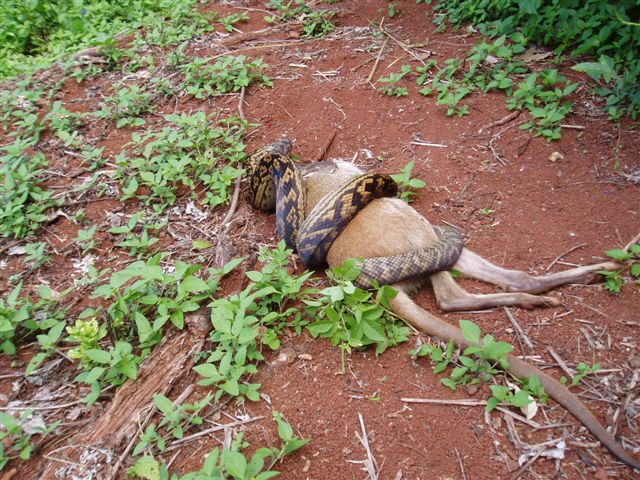
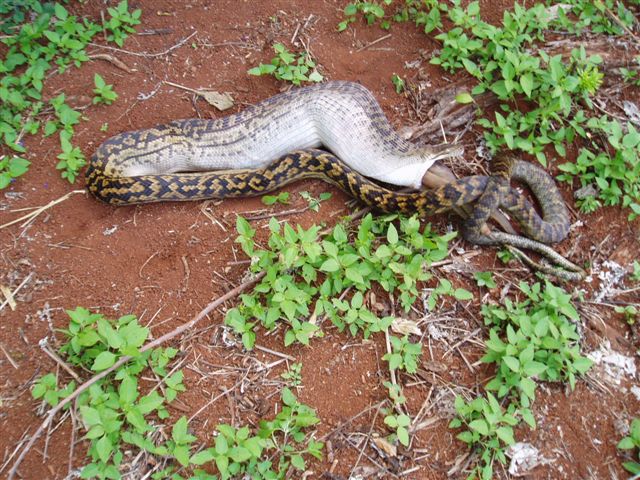
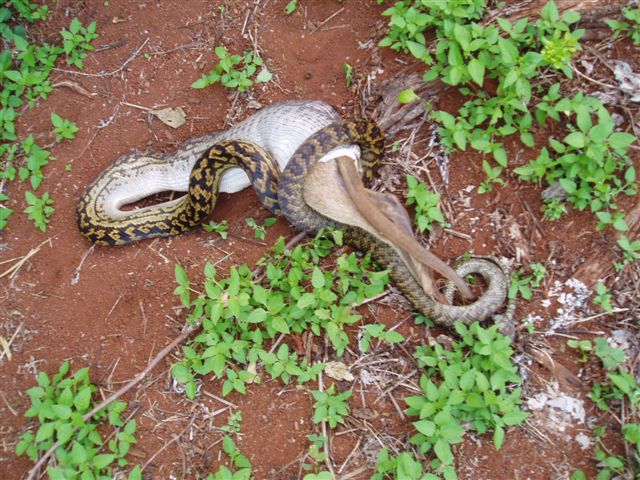
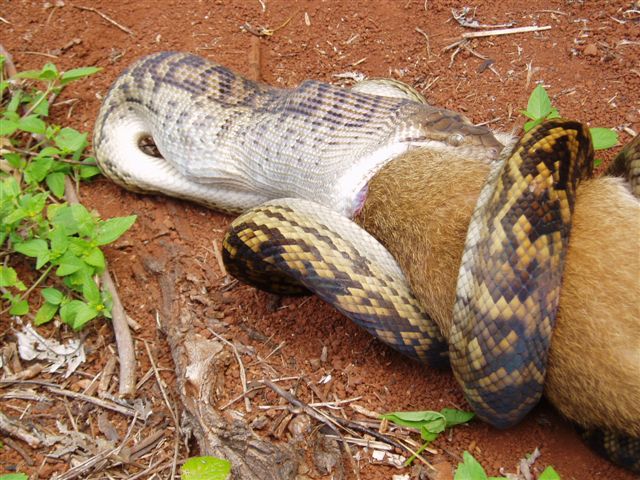
Snake Swallowing a Kangaroo

Snake swallowing a kangaroooooo. This is really amazing!


Friday, September 29, 2006

Sunday, September 24, 2006

Smallest teddy bear in the world

Bettina Of kaminski from Germany
Sewed [pyatimillimetrovogo] bear.

As they report, this is the smallest bear in the world.


Immense knowledge
Google

auctionads