A glimpse at what the future has in store for the space junkie
What would it be like to poke a comet in an effort to study what lies underneath its icy surface? What are the implications of the discovery of a ‘Super Earth’ round a dim, red star 15 light years from Earth, on the search for intelligence on other worlds? Can space tourism become an annual event? Will NASA’s Jupiter mission, named ‘Juno’ reach it goal to undertake a detailed study of the gigantic planet? Can India place a man on the moon in the next 2 years? The first of these questions was partially answered on 4th of July 2005; the answers to the remaining questions are some of what space scientists worldwide hoped to unravel subsequently.
NASA spacecraft Deep Impact's run-in with a comet on Monday, the 4th of July, 2005, may not be a one hit wonder. Scientists are studying other potential targets after the spacecraft completes its spectacular mission at Comet Tempel1. The main mission for the NASA craft was to create celestial fireworks. A ‘Flyby’ vehicle deployed an ‘Impactor’ probe for the hit-and-run encounter. The Impactor that thumped into Comet Tempel 1 vaporized upon impact. From its vantage point several hundred miles away, the Flyby spacecraft will use its telescopes, cameras and spectrometer to monitor the impact, all in an effort to study what's underneath the comet's icy surface.

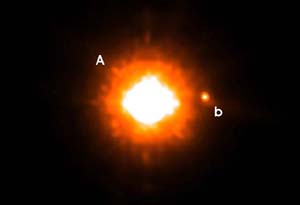
With the latest discovery of a ‘Super-Earth’ around a dim, red star 15 light years from Earth, Search for Extraterrestrial Intelligence (SETI) scientists have been pondering the implications for their search for intelligence on other worlds. This planet answers an ancient question when over 2,000 years ago, the Greek philosophers Aristotle and Epicurus argued about whether there were other Earth-like planets. Now, for the first time, there is evidence for a rocky planet around a normal star. The discovery emphasizes the similarity between this most recently detected planet, located around an M star called Gliese 876, and our own world. This is the smallest extra-solar planet yet detected and the first of a new class of rocky terrestrial planets. It's like Earth's bigger cousin in the planetary world. For astronomers pondering the possibility of life outside our solar system, the discovery is especially promising due to the sheer number of M stars in our galaxy. The overwhelming majority of stars are M dwarfs-hundreds of billions in our galaxy alone. This suggests that there could be enormous numbers of planetary habitats capable of sustaining life.
 Is space travel possible in our lifetime? Possibly-plans are underway to dissolve a myth that a majority of the public will not experience space travel in their lifetime. What might the countdown to space be like? At the moment the VSS Enterprise, the first Virgin Galactic spacecraft is seriously contemplating a viable model for space tourists.
The Virgin Galactic website says they have planned an unforgettable experience-which would include a six day medical preparation, G-Tolerance training, talking to space experts about how to get the most from your experience, flying in the simulator and in the evenings and dinner with astronauts and guest speakers. The spacecraft is expected to reach a speed of vertically to Mach 1 (around 600 mph) in less than 10 seconds and eventually disappear into space at over 3 times the speed of sound. Unlike a conventional space rocket launch from a launch pad, this space odyssey will begin on a runway. Virgin Galactic craft are carried under a mother ship to almost 10 miles above sea level before the countdown begins.
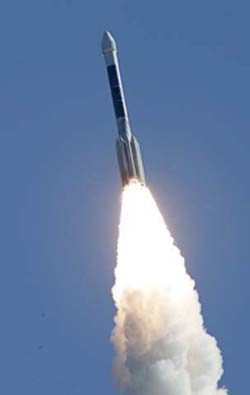 Once the spaceship is released from the mother ship, the astronaut pilot ignites the engine and be prepared to be accelerated at 4G to a speed faster than a bullet! Virgin Galactic says the ergonomic design of the seats will keep you comfortable!
What about touchdown? After soaking up the thrill of space, prepare to return to earth. At around 50,000 feet the spaceship will return to a glider-like configuration for the landing back at the spaceport.
The space journey would be lauded at a magnificent gala dinner, where you will be awarded your astronaut wings and maybe even a part of the rocket motor used on your trip for you to keep as a memento! If you are all fired up, Virgin plans to begin the first flights in 2008. The ticket price has been set at US$200,000 and the minimum, fully refundable deposit to secure your spaceship seat is US$20,000!
Space entrepreneur Peter Diamandis announced the The Ansari X Prize, modeled on aviation awards at the beginning of the 20th century, designed to spur the private sector into building a space tourism industry.
The X Prize Cup could be thought of as a cross between Champ Grand Prix racing and the Olympics. The first X Prize Cup was held in the beginning of 2006. This international ‘Grand Prix of Space’ was staged in New Mexico at the Southwest Regional Spaceport near the city of Las Cruces. Class spaceships from around the globe competed for cash prizes and awards in several categories, such as fastest turnaround, maximum altitude reached, total number of passengers flown over the 10 day event; and even the ‘coolest looking ship’.
The world watched in awe as SpaceShip One lifted off two years back. The revolutionary spacecraft was the first privately financed vehicle to send humans into space. The plane White Knight carried SpaceShipOne, attached beneath it, to about 50,000 feet where the spacecraft detached and rocketed into space. Shortly after SpaceShipOne touched down, the chief designer of that vehicle, Burt Rutan of Scaled Composites, made it clear he’s already got his sleeves rolled up to realize his long-held dream-cheap and easy access to space. Market studies suggest there may be a billion dollar demand for such flights to the edge of space and, eventually, into orbit around the Earth.
 Another entrepreneur who has plunged headfirst into the big business of space tourism is Sir Richard Branson whose Virgin Group and the Paul Allen company, Mojave Aerospace Ventures, have signed an agreement to license the technology to develop the world’s first privately funded fleet of spaceships. Along with Virgin’s agreement with Mojave Aerospace Ventures, the company has also signed a Letter of Intent with Rutan and Scaled Composites to utilize the technology in building a new spaceship and derivatives thereof, for the purposes of carrying paying passengers on a journey to orbit, returning to Earth as astronauts two hours later. As a Microsoft co-founder and now billionaire, Allen bankrolled the SpaceShipOne effort, with Rutan and his Scaled Composites team designing and building the vehicle. "I backed the development of SpaceShipOne because I saw this as a great opportunity to demonstrate that space exploration could someday be within the reach of private citizens," Paul Allen said in a September 27, 2004 press statement. "Today’s deal with Virgin represents the next stage in the evolution of the SpaceShipOne concept, and will likely be the first of a number of deals that will utilize the technology developed during its creation," Allen said.
Virgin has formed Virgin Galactic, a new company envisioned by Branson to become the world’s first commercial space tourism operator. Subject to the necessary safety and regulatory approvals the company hopes to begin operating flights from 2008. Branson has said that he is dedicated to carrying commercial passengers on space flights. A fleet of five vessels are to be built, each capable of flying 5 individuals. Both Rutan and Branson publicly stated they will be onboard the inaugural flight of Virgin Galactic’s VSS Enterprise in three years time.
According to Virgin Galactic, it expects that around $100 million will be invested in developing the new generation of spaceships and ground infrastructure required to operate a suborbital space tourism experience. Initially, Virgin Galactic’s passenger spaceliner would fly from Mojave. "If it goes well, we’d love to have one based in Australia, Japan, Europe, and based in South Africa, or Africa somewhere," Branson has stated.

Rutan said that the key thrust for the Paul Allen SpaceShipOne work focused on a set of innovations thought to have enormous benefits for the safety of space tourism.
NASA has announced the selection of a new concept study for a Jupiter mission that will now move into a preliminary design phase. The mission is called Juno, and its goal is to perform a detailed study of the giant planet Jupiter. The Juno spacecraft would be placed in a polar orbit around Jupiter. This would allow it to perform detailed gravitational measurements that could detect whether or not Jupiter has an ice-rock core beneath its clouds of hydrogen and helium. The mission will also study the composition of Jupiter’s atmosphere, determining the amounts of water and ammonia present. Another investigation will be a study of convection within Jupiter’s

In addition, Juno will explore Jupiter’s magnetosphere, especially in the unmapped Polar Regions and attempt to determine the origin of the jovian magnetic field.
Encouraged by the rapid pace of progress to date on its planned $100 million lunar orbiter mission, the Indian Space Research Organisation (ISRO) has moved the launch date for the robotic probe up by one year. Originally scheduled to launch in 2008, the Chandrayaan-1 mission now could lift off in 2007 or even earlier. The spacecraft and the launch vehicle are available virtually off the shelf and work on fabricating the payload has already begun.